
Common Questions About This Service
Office managers and property operators in Las Vegas often need clarity on how commercial carpet tile performs in desert climates, how replacement works years after installation, and what drives long-term cost efficiency.
How does carpet tile replacement work years after the original installation?
Replacement tiles are ordered from the same dye lot or a closely matched current production run, then individual worn tiles are pulled up and swapped without disturbing adjacent sections, making the process fast and low-disruption compared to broadloom replacement.
What backing type should I specify for my commercial space?
Cushion-backed tiles provide comfort underfoot and sound dampening for office environments, while rigid-backed tiles handle rolling loads better in hospitality and retail settings where carts and luggage are common.
Can commercial carpet tile handle moisture exposure in Las Vegas hospitality properties?
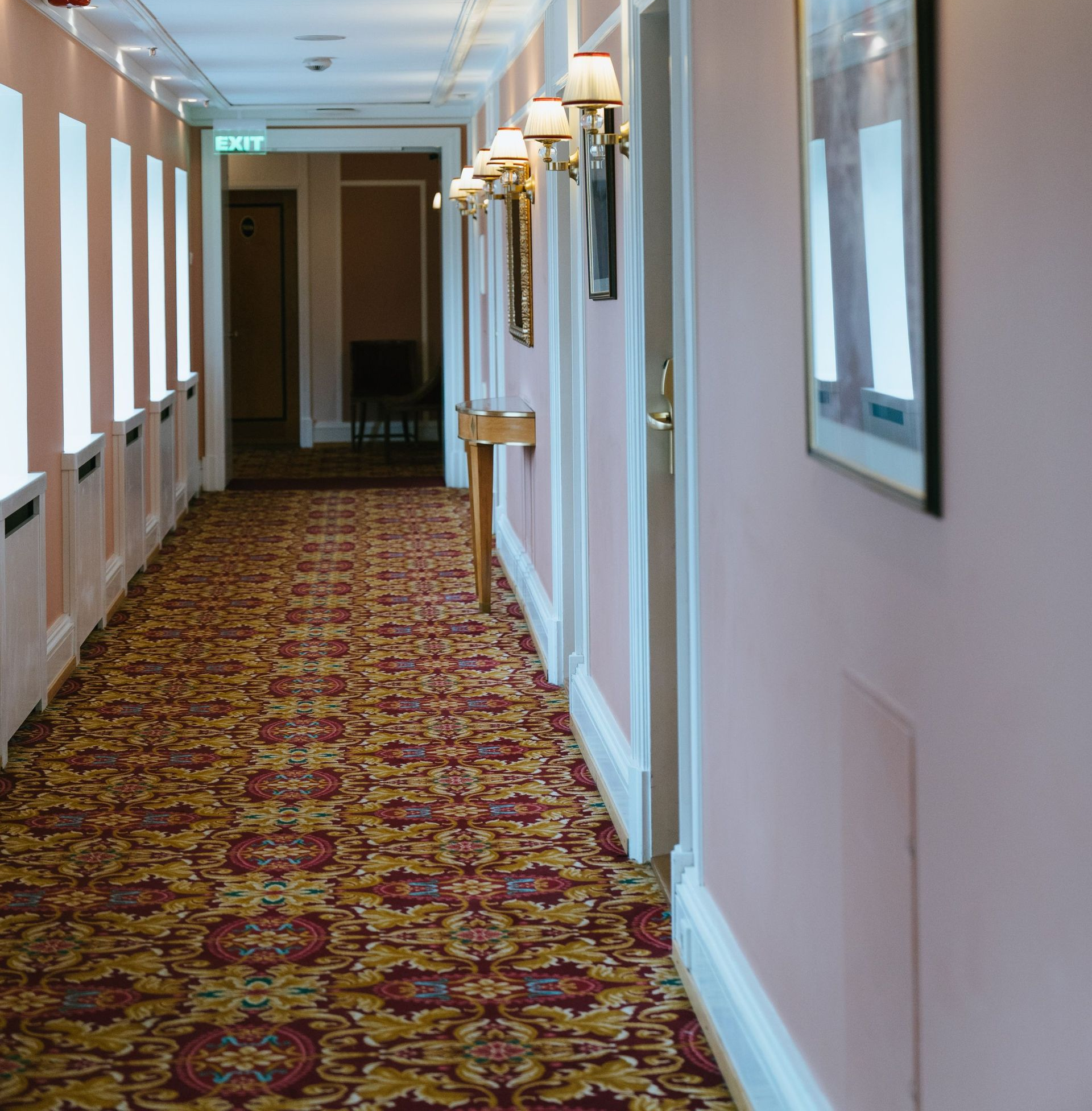
Commercial-grade carpet tile with moisture-resistant backing tolerates spills and periodic wet cleaning without delaminating or developing mold, making it suitable for hotel corridors and lobby areas where broadloom would fail.
How is the layout planned to minimize future replacement costs?
Traffic lanes are identified during the initial site visit, and tile orientation is planned so high-wear zones align with easily accessible sections, reducing the number of tiles that need replacement and simplifying future maintenance logistics.
What subfloor preparation is required before carpet tile installation?
Subfloors must be clean, dry, and level within industry flatness tolerances to prevent tile edges from lifting or creating trip hazards, which often requires grinding or patching uneven concrete slabs common in older Las Vegas commercial buildings.
Academy Stone, Tile & Flooring approaches commercial carpet installation with the same 20-plus-year craft standard applied to tile and countertop projects, planning every layout for long-term operational efficiency rather than short-term installation convenience. Request a traffic analysis and layout consultation to develop a modular carpet strategy for your property.
DESIGNED TO INSPIRE. BUILT TO ENDURE.
Commercial Carpet in Las Vegas for office, hospitality, and multi-tenant properties requiring maintainable, traffic-smart floor systems
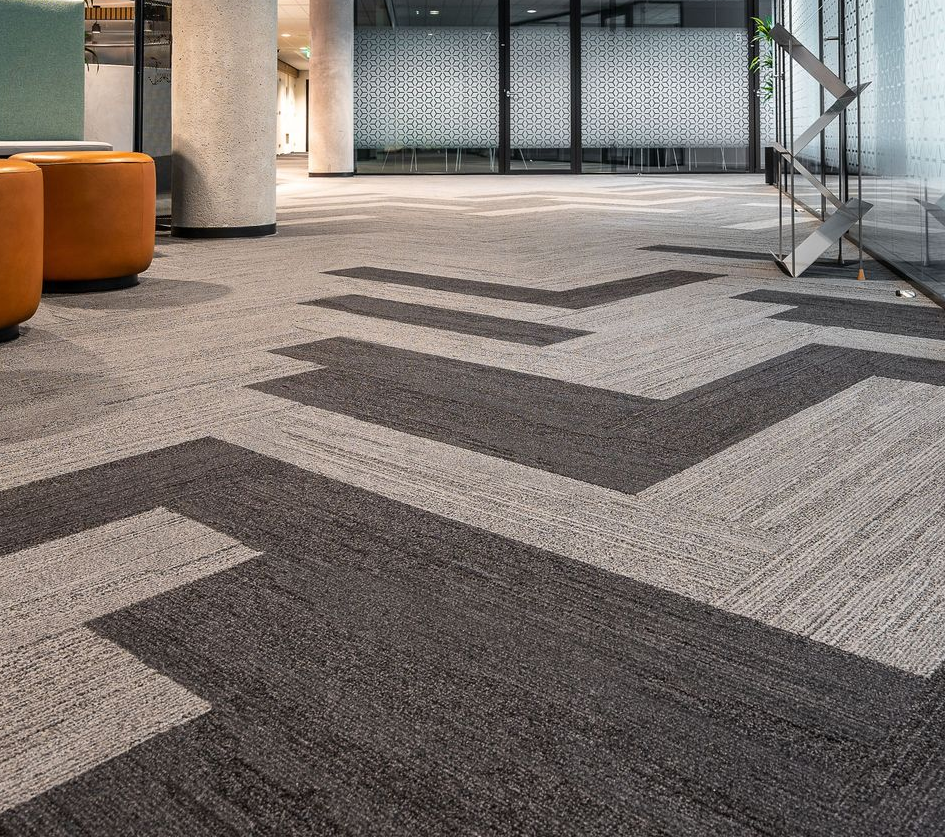
Valley office and hospitality properties increasingly rely on commercial carpet tile because it allows worn sections to be replaced individually without shutting down entire floors—a critical advantage along the Strip corridor and in Spring Valley where business continuity cannot be interrupted for full-floor replacements. Academy Stone, Tile & Flooring installs commercial carpet and carpet tile systems across Las Vegas, planning layout around traffic lanes so high-wear areas can be swapped out modularly while the rest of the floor remains in service. This operational mindset separates commercial-focused installers from residential contractors who treat carpet as a single-use surface.
Commercial carpet installation involves traffic analysis to determine which sections will wear first, selecting backing systems that handle rolling loads and moisture exposure in hospitality environments, and coordinating installation around business hours to minimize disruption. The layout is planned for the long game—entrance zones, elevator corridors, and high-traffic pathways are identified upfront so replacement tiles can be ordered and swapped efficiently years later.
Arrange a site assessment to map traffic patterns and develop a modular carpet layout for your property.
stone
tile
flooring
TAILORED TEXTURES FOR DISTINCTIVE SPACES
Commercial carpet tile differs from broadloom carpet in modularity, backing construction, and replacement strategy. Each tile is an independent unit, typically 24 inches square, with a rigid backing that resists deformation under rolling chairs and foot traffic. When a section near an elevator or break room wears prematurely, you replace only those tiles rather than tearing out and re-stretching an entire room—a process that would require furniture removal, downtime, and significantly higher labor costs.
Once installation is complete, you notice a floor that looks uniform across the entire space but functions as a series of replaceable zones, with seams that remain tight and tiles that stay flat even in high-traffic corridors. The floor becomes a manageable asset rather than a disposable surface, and maintenance teams can address localized wear without calling in installers for full-floor jobs.
This service includes subfloor leveling to prevent tile edges from lifting, adhesive selection based on moisture exposure and rolling load requirements, and layout coordination around architectural features like columns and workstations. It does not include furniture moving or storage, which must be arranged separately before installation begins.