
Common Questions About This Service
Commercial tile projects in Las Vegas raise specific questions about codes, performance ratings, and installation standards. The answers below address what property managers and business owners typically need to know.
What are DCOF ratings and why do they matter for commercial tile?
DCOF measures slip resistance on wet and dry surfaces, and commercial spaces must meet minimum ratings based on occupancy type—restaurants, hotel lobbies, and retail floors all have different requirements to reduce liability and ensure ADA compliance.
How does commercial grout differ from residential grout?
Commercial grout formulations are rated for chemical exposure, heavy cleaning, and moisture resistance beyond what residential products provide—selecting grout based on occupancy load and cleaning protocols prevents premature staining and joint failure in high-traffic environments.
Why does substrate prep matter more in commercial installations?
Commercial tile must remain flat and bonded under thousands of footsteps daily, so substrates are tested for moisture, verified for flatness within tighter tolerances than residential work, and treated with crack isolation membranes where building movement is expected.
What makes large format tile challenging in commercial spaces?
Large format tile magnifies any substrate irregularities and requires leveling systems to prevent lippage—commercial installations use mechanical leveling and stricter flatness standards to maintain ADA compliance and prevent trip hazards in public areas.
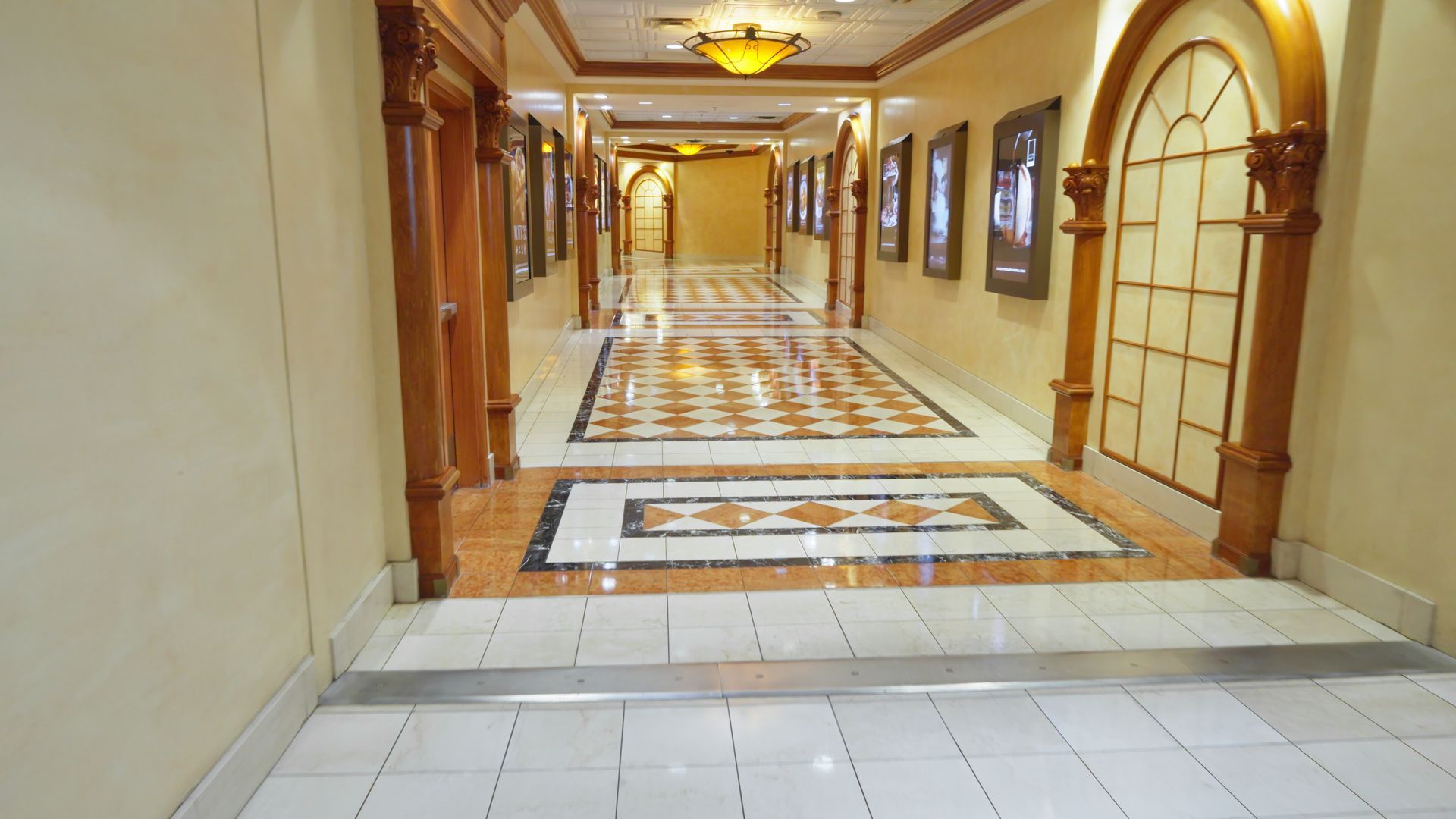
How long does commercial ceramic tile last in Strip corridor hotels and restaurants?
Properly installed commercial tile with correct grout and mortar specs will last 20 to 30 years under heavy foot traffic when maintained with appropriate cleaning protocols—the investment pays off through reduced replacement costs and code compliance over the building's life.
Academy Stone, Tile & Flooring has built its commercial reputation on code-compliant, traffic-rated tile installations throughout Las Vegas. Arrange a site consultation to discuss your project requirements and occupancy specifications.
Trusted by premier commercial builders
Commercial Ceramic Tile in Las Vegas for hotels, restaurants, retail, and office spaces requiring slip-resistant, traffic-rated flooring
Strip corridor hotels, restaurants, and retail spaces demand tile that passes commercial slip-resistance ratings and holds under daily high-volume traffic. Commercial roots define Academy Stone, Tile & Flooring's founding identity—this is not a residential contractor dabbling in commercial work. Commercial-grade grout and mortar specs are selected per occupancy load, not borrowed from residential jobs, and the company maintains an existing commercial client base managed by dedicated staff with 20 years in the trade.
Commercial ceramic tile installation begins with substrate preparation and product selection based on building codes, occupancy type, and expected foot traffic. Mortar formulations differ between hospitality environments and retail spaces, and grout specs are matched to slip-resistance requirements and cleaning protocols. The tile itself must meet DCOF (Dynamic Coefficient of Friction) ratings for wet and dry conditions, and installation methods must comply with TCNA (Tile Council of North America) standards for commercial applications.
Request a site evaluation to review occupancy requirements and substrate conditions.
stone
tile
flooring
The Craftsmen Behind Las Vegas' Finest Projects
Commercial installations use leveling systems and lippage control to maintain flatness across large format tile, ensuring ADA compliance for accessibility and reducing trip hazards in public spaces. Grout joints are sized and filled with products rated for heavy cleaning and moisture exposure, and expansion joints are placed at structural breaks to accommodate building movement without cracking. Substrate prep includes moisture testing, crack isolation membranes where needed, and flatness verification beyond residential tolerances.
Once the project is complete, you'll see tile surfaces that remain level and slip-resistant under high foot traffic, grout lines that hold up to commercial cleaning equipment and chemical exposure, and floors that comply with building codes for public occupancy. The installation handles daily wear from hundreds or thousands of visitors without cracking, shifting, or requiring premature replacement. Academy Stone, Tile & Flooring applies the same commercial-grade standards that built the company's reputation to every hotel, restaurant, and retail project in the Valley.
Product sourcing also matters—commercial tile must meet performance ratings that residential tile doesn't require, including abrasion resistance, chemical resistance, and slip ratings verified through independent testing, not manufacturer claims.